E-Waste and Climate Change: An Overlooked Connection
Introduction
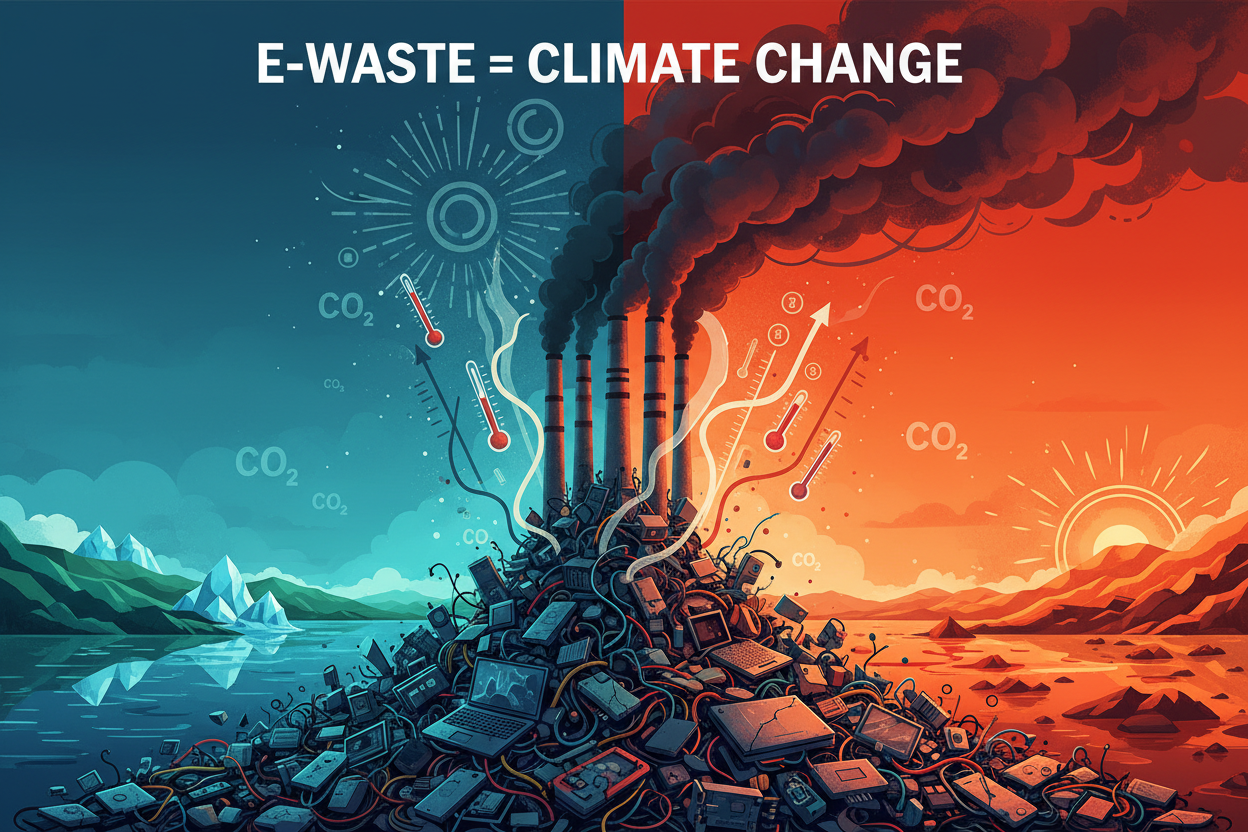
When people think about climate change, the conversation usually revolves around fossil fuels, vehicles, factories, or deforestation. Rarely does electronic waste (e-waste) enter the discussion. Yet, the discarded mobiles, laptops, and smartwatches we use every day are quietly contributing to global warming at an alarming rate. The connection between e-waste and climate change is real, measurable, and deeply concerning — but it remains largely overlooked.
With rapid technological advancements, shorter upgrade cycles, and growing consumer demand, electronic devices are being replaced faster than ever. Every unused smartphone, outdated laptop, or broken smartwatch adds to the mounting e-waste crisis, increasing carbon emissions, resource extraction, and environmental degradation. Understanding this hidden connection is essential if we want to combat climate change effectively.
Understanding E-Waste: What Counts as Electronic Waste?
E-waste refers to discarded electrical or electronic devices that are no longer in use or have reached the end of their life cycle. This includes:
-
Mobile phones and smartphones
-
Laptops and tablets
-
Smartwatches and wearable devices
-
Chargers, batteries, cables, and accessories
These devices may look small, but collectively they represent one of the fastest-growing waste streams in the world. According to global estimates, millions of tonnes of e-waste are generated annually — and a significant portion comes from personal electronics.
The Hidden Carbon Footprint of Mobiles, Laptops, and Watches
Manufacturing Emissions
The biggest climate impact of electronic devices happens before you even turn them on. Manufacturing smartphones, laptops, and smartwatches requires:
-
Mining rare earth metals like lithium, cobalt, and nickel
-
Energy-intensive refining processes
-
Large-scale industrial manufacturing
Each smartphone alone can generate dozens of kilograms of CO₂ emissions during production. Laptops generate even more due to larger batteries, processors, and displays. Smartwatches, despite their size, also rely on rare materials and complex manufacturing chains. When devices are discarded prematurely, the embedded carbon emissions are effectively wasted — accelerating climate change.
Resource Extraction and Environmental Damage
To produce mobiles, laptops, and watches, manufacturers extract natural resources from the earth. This leads to:
-
Deforestation
-
Soil degradation
-
Water pollution
-
Loss of biodiversity
Mining activities release greenhouse gases and destroy natural carbon sinks like forests. The more frequently we replace devices, the more pressure we place on the planet’s limited resources.
E-Waste Disposal: A Major Climate Threat
Landfills and Greenhouse Gas Emissions
When e-waste ends up in landfills, it doesn’t simply disappear. Over time:
-
Plastics degrade and release methane
-
Batteries leak toxic chemicals
-
Metals oxidize and contaminate soil and water
Methane is over 25 times more potent than carbon dioxide in trapping heat in the atmosphere. Improper disposal of electronic waste directly fuels climate change.
Informal Recycling and Burning
In many parts of the world, e-waste recycling happens informally. Devices are:
-
Burned to extract metals
-
Dismantled without safety measures
-
Treated using acid baths
These processes release carbon dioxide, black carbon, and toxic gases into the atmosphere, contributing to air pollution and global warming.
Mobiles: The Largest Contributor to E-Waste Growth
Smartphones are among the biggest contributors to e-waste due to:
-
Short upgrade cycles (1–2 years)
-
Rapid innovation
-
Marketing-driven consumer behavior
Millions of phones are replaced annually even when they are still functional. Each unused phone sitting in a drawer represents wasted energy, wasted resources, and unnecessary carbon emissions. Extending smartphone usage by just one extra year can significantly reduce its environmental footprint.
Laptops: Bigger Devices, Bigger Climate Impact
Laptops have a much higher carbon footprint than smartphones due to:
-
Larger batteries
-
More complex processors
-
Higher material consumption
When laptops are discarded early, the environmental cost is enormous. Recycling rates for laptops are also lower than expected, meaning many end up contributing to e-waste pollution. Refurbishing and reusing laptops can reduce emissions by up to 50–70% compared to manufacturing new ones.
Smartwatches and Wearables: Small Devices, Big Problem
Smartwatches and fitness trackers are often overlooked in the e-waste discussion. Despite their size, they:
-
Use lithium-ion batteries
-
Contain rare metals
-
Have limited repairability
Most wearables have a short lifespan and are difficult to recycle. Their growing popularity means they are becoming a significant source of electronic waste, quietly adding to climate change.
Why E-Waste Recycling Matters for Climate Action
Reducing Carbon Emissions
Proper recycling of electronics:
-
Recovers valuable materials
-
Reduces the need for mining
-
Cuts manufacturing emissions
Recycling metals like aluminum and copper uses far less energy than producing them from raw materials, leading to substantial carbon savings.
Supporting a Circular Economy
A circular economy focuses on:
-
Reuse
-
Repair
-
Refurbishment
-
Recycling
Instead of constantly producing new devices, extending the life of existing mobiles, laptops, and watches can dramatically reduce environmental impact.
The Role of Consumers in Reducing E-Waste and Climate Impact
Use Devices Longer
Avoid upgrading just for minor improvements. Keeping a phone or laptop for an extra year significantly lowers its lifetime emissions.
Repair Instead of Replace
Fixing batteries, screens, or components reduces waste and saves resources.
Buy Refurbished Electronics
Refurbished devices offer excellent performance with a much smaller carbon footprint.
Recycle Responsibly
Use certified e-waste recycling programs instead of throwing electronics in regular trash.
How Companies and Governments Can Help
Eco-Design and Repairability
Manufacturers should design devices that are easier to repair and recycle.
Extended Producer Responsibility (EPR)
Companies must take responsibility for the full lifecycle of their products, including end-of-life recycling.
Consumer Awareness Campaigns
Education plays a crucial role in changing behavior around device usage and disposal.
The Future: Turning E-Waste Into a Climate Solution
If managed correctly, e-waste can become part of the solution rather than the problem. Innovations in recycling technology, sustainable materials, and longer-lasting devices can help reduce emissions.
Climate action is not just about renewable energy or electric vehicles — it also includes how we use, reuse, and dispose of our electronics.
Conclusion — Addressing the Overlooked Connection
The link between e-waste and climate change is undeniable. Every discarded mobile, laptop, or smartwatch carries a hidden carbon cost that contributes to global warming. By extending device lifespans, supporting recycling, and adopting responsible consumption habits, we can significantly reduce this impact. Climate change solutions start with everyday choices — and how we manage electronic waste is one of the most powerful yet overlooked actions we can take.
FAQs
Q.1. How does e-waste contribute to climate change?
E-waste increases greenhouse gas emissions through manufacturing, improper disposal, and toxic recycling practices.
Q.2. Are smartphones a major source of e-waste?
Yes, smartphones are among the fastest-growing contributors due to frequent upgrades.
Q.3. Is recycling electronics good for the climate?
Yes, recycling reduces mining, saves energy, and lowers carbon emissions.
Q.4. Do smartwatches really impact the environment?
Despite their size, smartwatches contain batteries and rare metals that contribute to e-waste.
Q.5. What is the best way to reduce e-waste impact?
Use devices longer, repair when possible, and recycle responsibly.