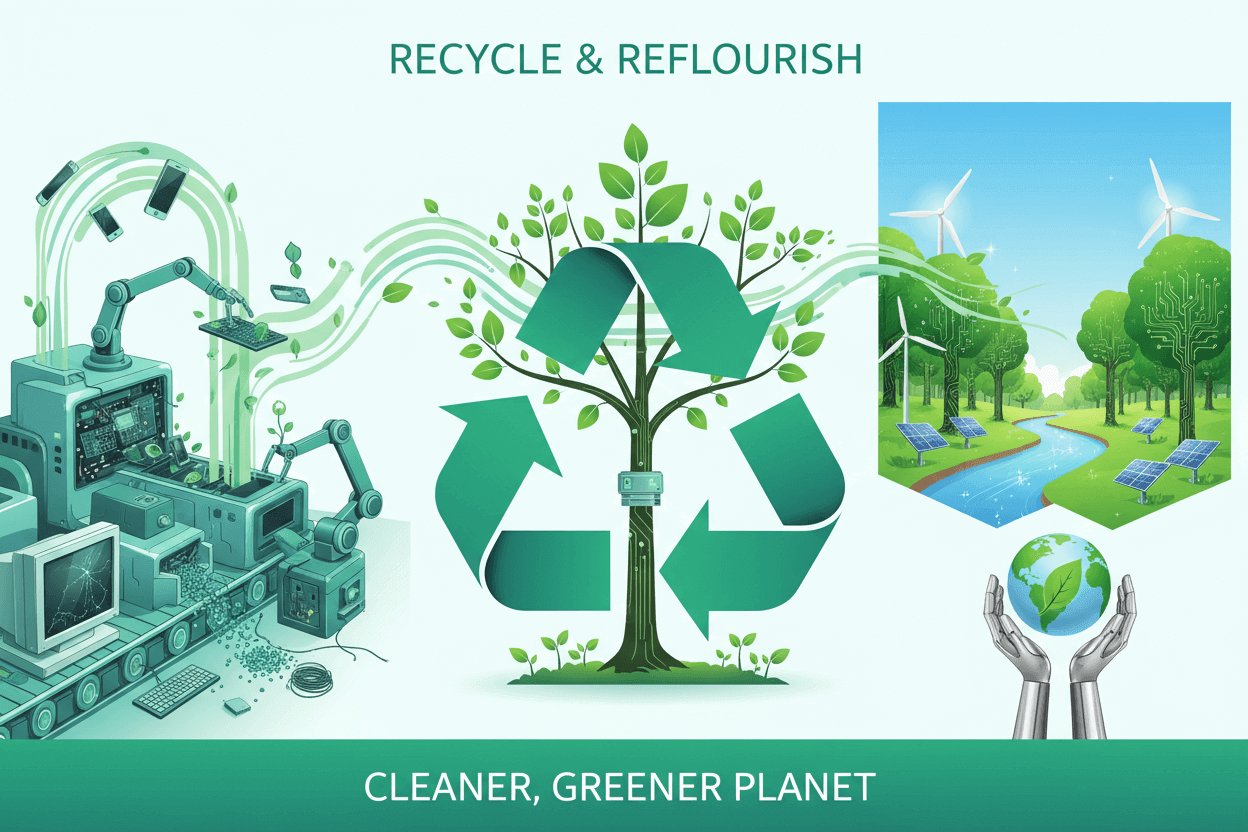
Responsible e-waste management supports a cleaner green planet.
Introduction
In the modern digital era, technology has become an essential part of daily life — from smartphones and laptops to smart home devices and wearables. However, with this rapid innovation comes an alarming rise in electronic waste (E-waste). Proper E-waste management is no longer an option; it is a global necessity to protect our planet. Responsible handling of discarded electronics helps conserve resources, reduce pollution, and support a cleaner green planet. This blog explores the meaning of E-waste, its harmful effects, the importance of recycling, and how individuals, businesses, and governments can act responsibly to achieve sustainability.
What Is E-Waste?
E-waste, or electronic waste, refers to discarded electrical or electronic devices that are no longer useful or have reached the end of their life. These include items like smartphones, laptops and batteries. As technology advances, millions of such devices are replaced every year, creating a growing waste stream.
Unfortunately, a large percentage of this E-waste is dumped or burned instead of being recycled properly. This not only causes severe environmental pollution but also wastes valuable materials like gold, copper, aluminum, and rare earth metals that could be reused. Responsible E-waste management aims to recover these materials while preventing harmful chemicals from entering soil and water systems.
The Rising Challenge of E-Waste Globally
The world currently produces over 60 million tonnes of E-waste every year, and this number continues to grow with increasing consumer demand for electronics. Countries lead in E-waste generation, but developing regions often face the burden of unsafe waste processing.
Improper handling — such as open burning or acid baths — releases toxic substances like lead, mercury, and cadmium into the environment. These pollutants contaminate air, soil, and water, threatening both human health and biodiversity. If this trend continues unchecked, the planet faces serious environmental damage that could last for generations.
The solution lies in responsible E-waste management, where devices are collected, repaired, refurbished, or recycled in an environmentally safe way.
Why Responsible E-Waste Management Is Essential
Proper E-waste management ensures that the life cycle of electronic products does not end in landfills. Instead, it promotes recycling, reusing, and reducing unnecessary waste. Below are key reasons why responsible management matters:
-
Protecting the Environment: Recycling prevents harmful toxins from leaching into soil and water systems, keeping ecosystems clean.
-
Conserving Natural Resources: By recovering metals and plastics from old devices, we reduce the need for mining new materials.
-
Reducing Greenhouse Emissions: Refurbishing and recycling electronics require far less energy than producing new ones, helping fight climate change.
-
Promoting Circular Economy: Repair and reuse extend product lifespans, creating a continuous loop of sustainability.
-
Creating Jobs: The E-waste recycling sector generates employment opportunities in repair, refurbishment, and logistics industries.
The Role of Recycling in Reducing E-Waste
Recycling is the cornerstone of responsible E-waste management. It involves collecting old electronics, dismantling them safely, and extracting reusable components and materials. Metals like gold, silver, copper, and aluminum can be recovered and used to make new devices, saving both energy and resources.
Certified recycling facilities use advanced technologies to ensure that hazardous materials are separated and treated safely. This reduces pollution and minimizes the amount of waste sent to landfills. Moreover, recycling old gadgets instead of discarding them helps consumers and manufacturers take part in the circular economy, where waste is transformed into valuable resources.
E-Waste and Its Impact on Human Health
Improper E-waste disposal has serious consequences for human health. When electronic devices are burned or dismantled without safety measures, they release lead, mercury, and brominated flame retardants, which are toxic to the nervous system and can cause respiratory problems, skin diseases, and even cancer.
Communities living near informal E-waste dumps are most affected, especially children, who are vulnerable to chemical exposure. Responsible E-waste recycling facilities not only protect the planet but also ensure the health and well-being of people who handle these materials daily.
How Businesses Can Support Sustainable E-Waste Management
Businesses are major contributors to E-waste, as offices frequently upgrade computers, printers, and networking equipment. To support sustainability, companies can adopt several practices:
-
Implement take-back programs: Encourage customers to return old devices for safe disposal.
-
Partner with certified recyclers: Work with organizations that follow eco-friendly recycling processes.
-
Opt for refurbishment: Refurbish old devices for employee reuse or donate them to schools and NGOs.
-
Track waste generation: Maintain transparent records of waste quantities and disposal methods.
-
Adopt sustainable procurement: Buy electronics designed for easy repair and recycling.
By taking these steps, businesses demonstrate corporate responsibility and contribute to global environmental goals.
How Individuals Can Help Reduce E-Waste
Every individual plays a role in reducing E-waste and protecting the planet. Here are some easy actions to take:
-
Repair before replacing: Fix minor issues instead of buying new devices immediately.
-
sell: Give old gadgets a second life through donation or resale.
-
Buy refurbished electronics: Certified refurbished phones and laptops reduce waste and cost.
-
Recycle responsibly: Drop off old electronics at authorized collection centers.
-
Limit gadget consumption: Choose long-lasting products over frequent upgrades.
By practicing these habits, individuals can significantly reduce their electronic footprint and help maintain a cleaner green planet.
E-Waste Management and the Future of Sustainability
Looking ahead, technological innovation must go hand-in-hand with sustainability. The next generation of electronic products should be designed for easy disassembly, repairability, and recyclability. Manufacturers are now focusing on eco-design, where devices use recycled materials and produce less waste.
Furthermore, global cooperation is essential. Developed nations must avoid exporting their E-waste to developing countries. Instead, investment in local recycling infrastructure and public education will ensure that everyone contributes to responsible E-waste management.
If each of us commits to recycling and reusing, we can collectively build a greener, cleaner, and more sustainable planet.
Conclusion
Responsible E-waste management is essential for protecting the environment, conserving resources, and ensuring a cleaner green planet for future generations. As technology evolves, so must our approach to sustainability. Through collective action — from individuals recycling their devices to governments enforcing strict policies — we can significantly reduce the harmful impact of E-waste. Each recycled gadget represents a step toward cleaner air, safer water, and healthier communities. The message is clear: managing E-waste responsibly isn’t just an environmental choice; it’s a moral duty we all share to keep Earth green, balanced, and full of life.
FAQs
Q.1. What is E-waste, and why is it harmful?
E-waste includes discarded electronic devices like phones and computers . It’s harmful because it contains toxic materials that pollute the environment when improperly disposed of.
Q.2. How can recycling E-waste help the planet?
Recycling conserves natural resources, reduces pollution, saves energy, and prevents hazardous chemicals from entering soil and water.
Q.3. What are some examples of responsible E-waste management?
Examples include certified recycling, refurbishment, donation programs, and government take-back initiatives.
Q.4. How can individuals reduce E-waste at home?
By repairing gadgets, donating old devices, and choosing durable or refurbished electronics instead of constantly buying new ones.
Q.5. What is the role of governments in managing E-waste?
Governments regulate E-waste disposal, promote recycling programs, enforce producer responsibility, and raise public awareness about sustainable practices.