E-waste management strategies for a cleaner environment
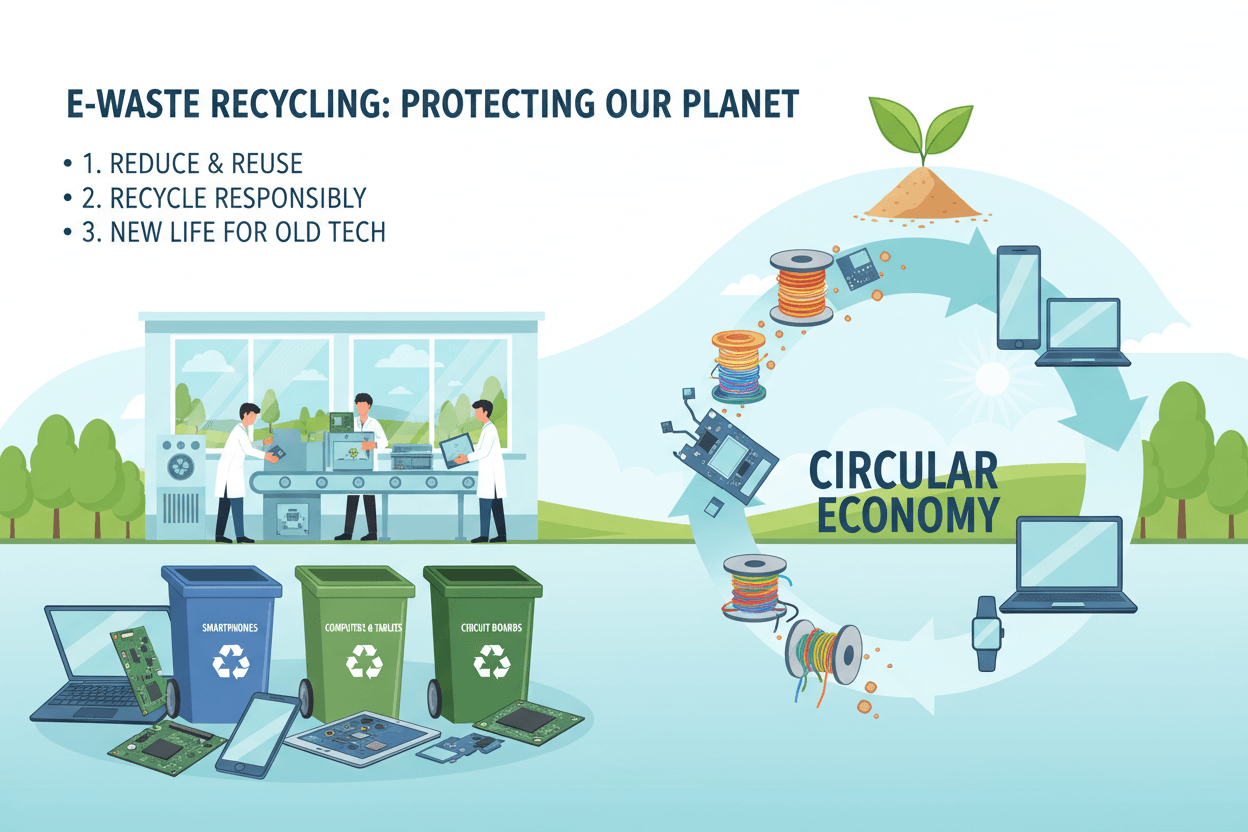
Introduction : E-waste management
The rapid growth of technology has transformed modern lifestyles, but it has also created a serious environmental challenge—electronic waste. Discarded gadgets such as smartphones, laptops, televisions, and other electronic devices are accumulating at an alarming rate. This growing pile of waste contains hazardous materials that can harm both human health and the environment if not handled properly. Effective e-waste management strategies for a cleaner environment are essential to reduce pollution, conserve resources, and promote sustainability.
With the increasing demand for new electronic devices, older products quickly become obsolete, leading to massive waste generation. Without proper recycling and disposal systems, toxic substances like lead, mercury, and cadmium can seep into soil and water. Implementing smart and sustainable e-waste management strategies for a cleaner environment can significantly minimize environmental damage while promoting responsible consumption and recycling habits. Understanding these strategies is the first step toward building a greener and cleaner future.
What is E-Waste and Why is it a Problem?
Electronic waste, commonly known as e-waste, refers to discarded electrical or electronic devices. This includes items such as computers, mobile phones, printers, and household appliances. The problem arises because these devices often contain toxic components that can pose serious risks when improperly disposed of.
One of the biggest concerns is the improper disposal of e-waste in landfills. When electronic devices are dumped without proper treatment, harmful chemicals can leach into the environment. This not only contaminates soil and water but also affects wildlife and human populations. Implementing e-waste management strategies for a cleaner environment ensures that such harmful effects are minimized.
Another major issue is the loss of valuable materials. Electronics contain precious metals like gold, silver, and copper, which can be recovered through recycling. By adopting efficient e-waste management strategies for a cleaner environment, these resources can be reused, reducing the need for mining and conserving natural resources.
Top E-Waste Management Strategies for a Cleaner Environment
1. Reduce Electronic Consumption
The most effective way to manage e-waste is to reduce its generation. Consumers should avoid frequently upgrading devices unless necessary. Opting for durable and repairable products can significantly decrease waste production. These practical e-waste management strategies for a cleaner environment encourage mindful consumption.
2. Reuse and Donate Devices
Instead of discarding old electronics, consider reusing or donating them. Many devices can still function effectively after minor repairs. Donating to schools, charities, or organizations extends the life cycle of products and supports e-waste management strategies for a cleaner environment.
3. Proper Recycling Programs
Recycling is one of the most crucial e-waste management strategies for a cleaner environment. Certified recycling facilities ensure that harmful materials are safely extracted and valuable components are reused. Governments and organizations should promote accessible recycling programs.
4. Extended Producer Responsibility (EPR)
EPR policies hold manufacturers accountable for the entire lifecycle of their products. This encourages companies to design eco-friendly products and take responsibility for their disposal. Such policies are essential e-waste management strategies for a cleaner environment.
5. Public Awareness and Education
Many people are unaware of the harmful effects of improper e-waste disposal. Awareness campaigns and educational programs can encourage responsible behavior and adoption of e-waste management strategies for a cleaner environment at the community level.
Role of Government and Organizations
Governments play a vital role in implementing effective policies for managing e-waste. Regulations and strict enforcement can prevent illegal dumping and promote safe recycling practices. Establishing collection centers and incentivizing recycling are key e-waste management strategies for a cleaner environment.
Organizations and businesses also have a responsibility to adopt sustainable practices. Companies can implement take-back programs, ensuring that used products are returned and recycled properly. These initiatives support e-waste management strategies for a cleaner environment while enhancing corporate social responsibility.
Collaboration between governments, businesses, and consumers is essential. By working together, stakeholders can create a robust system that supports efficient e-waste management strategies for a cleaner environment and ensures long-term sustainability.
Benefits of Effective E-Waste Management
Implementing proper e-waste management strategies for a cleaner environment offers numerous benefits. Firstly, it reduces environmental pollution by preventing hazardous substances from contaminating natural resources. Secondly, it conserves valuable materials through recycling and reuse.
Another significant benefit is energy conservation. Recycling electronic components requires less energy compared to producing new materials from scratch. This supports climate change mitigation efforts and strengthens e-waste management strategies for a cleaner environment.
Additionally, effective e-waste management creates economic opportunities. Recycling industries generate employment and contribute to economic growth. By investing in e-waste management strategies for a cleaner environment, societies can achieve both environmental and economic sustainability.
Challenges in E-Waste Management
Despite its importance, e-waste management faces several challenges. Lack of awareness, inadequate infrastructure, and weak enforcement of regulations hinder progress. Many developing regions struggle with implementing proper e-waste management strategies for a cleaner environment.
Another challenge is informal recycling practices. In many areas, unregulated recycling exposes workers to hazardous materials and causes environmental damage. Strengthening formal recycling systems is crucial for improving e-waste management strategies for a cleaner environment.
Technological advancements also contribute to the problem. Rapid innovation leads to shorter product lifespans, increasing waste generation. Addressing these challenges requires continuous improvement in e-waste management strategies for a cleaner environment and global cooperation.
Conclusion
The growing problem of electronic waste demands immediate attention and action. With technology becoming an integral part of daily life, the amount of discarded electronics will continue to rise. Implementing effective e-waste management strategies for a cleaner environment is no longer optional—it is a necessity for sustainable development.
By reducing consumption, promoting reuse, and supporting recycling initiatives, individuals can make a significant impact. Governments and organizations must also play their part by enforcing regulations and encouraging responsible practices. These combined efforts will strengthen e-waste management strategies for a cleaner environment and protect future generations.
A cleaner environment is achievable when everyone contributes to responsible e-waste management. By adopting sustainable habits and supporting eco-friendly initiatives, society can turn a growing problem into an opportunity for positive change. Embracing effective e-waste management strategies for a cleaner environment will pave the way for a healthier planet and a more sustainable future.
FAQs
Q.1. What is e-waste?
E-waste refers to discarded electronic devices such as smartphones, computers, and household appliances that are no longer in use.
2. Why is e-waste harmful to the environment?
E-waste contains toxic substances like lead and mercury, which can contaminate soil, water, and air if not properly managed.
3. How can individuals contribute to e-waste management?
Individuals can reduce usage, reuse devices, donate old electronics, and recycle them through certified programs.
Q.4. What is the role of recycling in e-waste management?
Recycling helps recover valuable materials and safely dispose of hazardous components, supporting a cleaner environment.
Q.5. What are the benefits of proper e-waste management?
Proper management reduces pollution, conserves resources, saves energy, and creates economic opportunities.