

Electronic Waste: A Silent Environmental Threat
- Posted by Shweta Sharma
Introduction
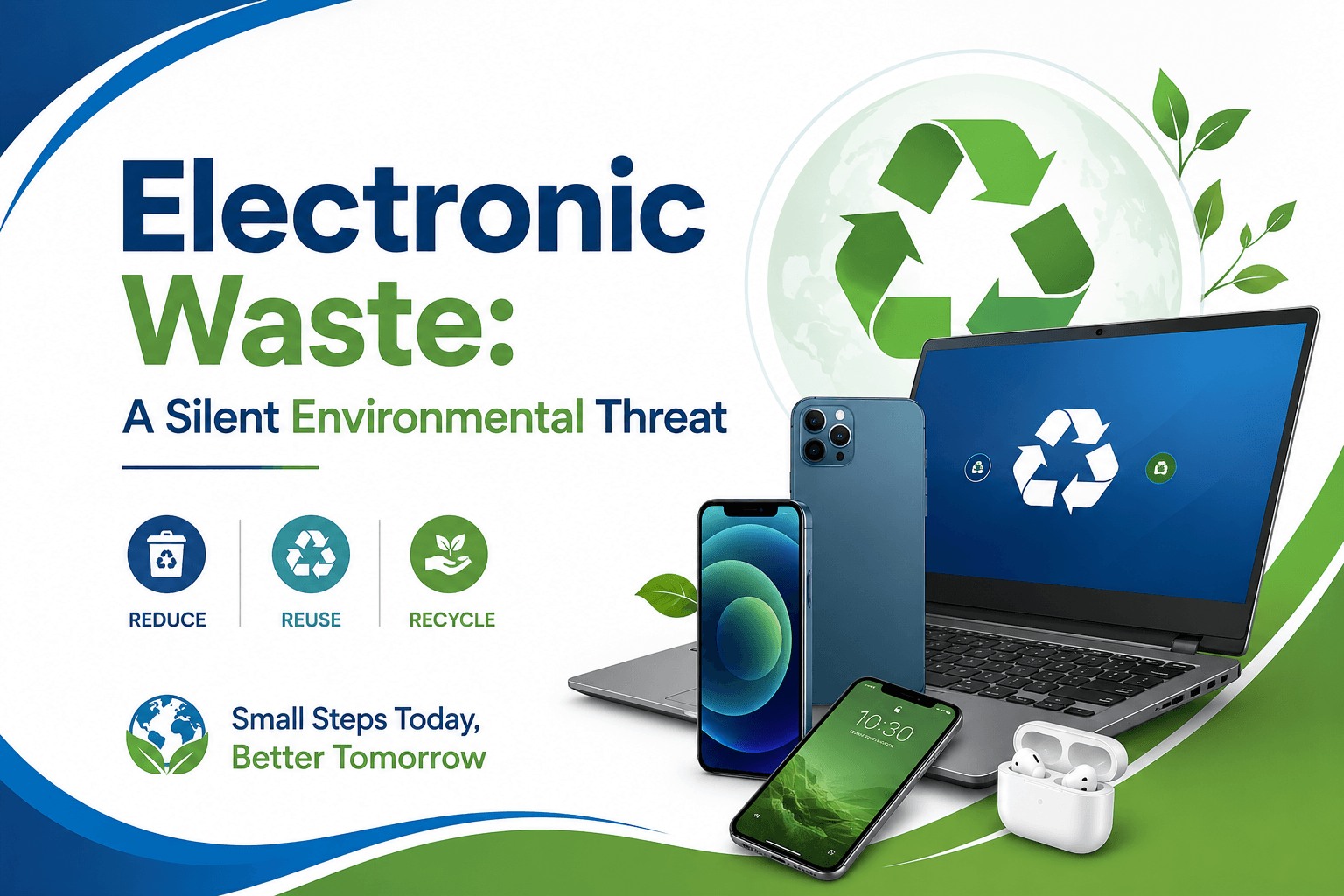
Electronic Waste: A Silent Environmental Threat is growing rapidly as technology becomes an essential part of daily life. Every year, millions of people replace their old mobile phones, laptops, and iPhones with newer models, creating a massive amount of electronic waste worldwide. From broken chargers and damaged smartphones to outdated computers and unused accessories, electronic waste has become one of the fastest-growing waste streams globally.
The increasing demand for modern gadgets has improved communication, education, and business operations, but it has also created serious environmental challenges. Many discarded electronic devices contain harmful chemicals such as mercury, lead, and cadmium. When electronic waste is dumped improperly, these toxic substances contaminate the soil, water, and air, causing long-term damage to ecosystems and human health.
Today, responsible e-waste recycling and sustainable disposal methods are more important than ever. Understanding the impact of electronic waste can help individuals make smarter choices regarding mobile phones, laptops, iPhones, and other electronic products.
What is Electronic Waste?
Electronic Waste: A Silent Environmental Threat refers to discarded electronic devices that are no longer useful or functional. Electronic waste, commonly called e-waste, includes mobile phones, laptops, iPhones, tablets, chargers, headphones, batteries, televisions, and computer accessories.
With rapid technological advancement, consumers frequently upgrade their devices to access better features, faster performance, and improved designs. As a result, older gadgets are often thrown away even when they can still be repaired or reused. This growing culture of replacement has significantly increased the volume of electronic waste around the world.
Many electronic devices contain valuable materials such as copper, silver, gold, and aluminum. However, they also contain hazardous substances that become dangerous when disposed of incorrectly. Informal recycling methods, including burning cables or dismantling devices without safety measures, release toxic chemicals into the environment.
Electronic waste is not just a waste management issue; it is also an environmental, economic, and public health challenge that requires immediate global attention.
Why Electronic Waste is Increasing Rapidly
The rapid rise of Electronic Waste: A Silent Environmental Threat is closely linked to changing consumer habits and technological innovation. Smartphones, laptops, and iPhones are now considered essential for communication, entertainment, education, and work.
One major reason for the increase in electronic waste is the short lifespan of gadgets. Many users replace their mobile phones every two to three years to enjoy improved cameras, better processors, and advanced software updates. Similarly, laptops become outdated due to changing software requirements and hardware limitations.
Aggressive marketing strategies also encourage consumers to purchase the latest devices regularly. Seasonal sales, exchange offers, and new product launches motivate users to discard old electronics even when they remain functional.
Another contributing factor is the difficulty of repairing modern devices. Many smartphones and laptops are designed with sealed batteries and integrated components, making repairs expensive or complicated. As repair costs rise, consumers often prefer buying new devices instead of fixing old ones.
The increasing popularity of smart gadgets, wearable devices, wireless accessories, and gaming electronics further adds to the global electronic waste problem.
Environmental Impact of Electronic Waste
Electronic Waste: A Silent Environmental Threat has severe consequences for the environment. Improper disposal of electronic devices leads to pollution that affects land, water, and air quality.
When mobile phones, laptops, and iPhones are dumped in landfills, toxic chemicals leak into the soil. These chemicals eventually contaminate groundwater sources, making water unsafe for human consumption and agriculture. Heavy metals such as lead and mercury are especially dangerous because they remain in the environment for a long time.
Burning electronic waste releases harmful gases into the atmosphere. Informal recycling activities often involve open-air burning to extract valuable metals from wires and circuit boards. This process produces toxic fumes that contribute to air pollution and respiratory diseases.
Electronic waste also affects wildlife and ecosystems. Polluted water bodies harm aquatic life, while contaminated soil reduces agricultural productivity. The environmental damage caused by e-waste disposal continues to increase as the volume of discarded electronics grows every year.
Reducing electronic waste through responsible recycling and sustainable consumption is essential for protecting the planet and preserving natural resources.
Health Risks Caused by Electronic Waste
The dangers of Electronic Waste: A Silent Environmental Threat extend beyond environmental damage and directly affect human health. People involved in informal recycling activities face serious health risks due to exposure to toxic materials.
Workers handling electronic waste without protective equipment are exposed to hazardous substances such as lead, cadmium, arsenic, and brominated flame retardants. These chemicals can cause skin diseases, respiratory problems, nerve damage, and kidney disorders.
Children living near e-waste dumping sites are particularly vulnerable. Toxic exposure during early development may lead to learning disabilities, weakened immune systems, and developmental disorders.
Burning plastic components from mobile phones, laptops, and iPhones releases dangerous smoke that affects nearby communities. Long-term exposure to these pollutants increases the risk of cancer, heart disease, and chronic lung conditions.
Improper disposal of lithium-ion batteries also creates fire hazards and chemical leakage risks. As electronic waste continues to grow, public health concerns associated with e-waste exposure are becoming increasingly serious worldwide.
The Role of Mobile Phones in E-Waste Generation
Mobile phones are among the largest contributors to Electronic Waste: A Silent Environmental Threat. With billions of smartphone users worldwide, the disposal rate of old phones has increased dramatically.
Consumers frequently replace their smartphones to access better cameras, faster internet connectivity, and updated operating systems. However, many discarded mobile phones still contain reusable components and valuable metals.
Unfortunately, a large percentage of old smartphones remain unused in homes or are thrown away improperly. Batteries from mobile devices contain hazardous chemicals that can leak into the environment if not recycled correctly.
Manufacturers and recycling organizations are encouraging smartphone recycling programs to reduce e-waste. Trade-in offers and refurbishment initiatives help extend the life cycle of mobile devices while reducing environmental damage.
Consumers can also contribute by donating old phones, repairing damaged devices, and choosing sustainable recycling options instead of discarding electronics irresponsibly.
Laptop Waste and Its Environmental Effects
Laptops are another major source of Electronic Waste: A Silent Environmental Threat. The increasing demand for remote work, online learning, and gaming has significantly boosted laptop sales worldwide.
Modern laptops contain complex electronic components, including processors, motherboards, batteries, and display panels. When disposed of improperly, these components release toxic materials into the environment.
Many users replace laptops because of slow performance, damaged batteries, or outdated software compatibility. However, upgrading storage or replacing components can often extend a laptop’s usability.
Improper disposal of laptop batteries is especially dangerous because lithium-ion batteries can explode or leak harmful chemicals. Recycling old laptops allows valuable materials such as aluminum, copper, and rare earth metals to be recovered safely.
Encouraging repair culture and responsible recycling practices can reduce the environmental burden caused by discarded laptops.
iPhones and Premium Device Waste
Premium smartphones like iPhones also contribute significantly to Electronic Waste: A Silent Environmental Threat. Although iPhones are known for durability and software support, millions of users upgrade to newer models regularly.
Many consumers purchase the latest iPhone models for improved features, advanced cameras, and better performance. As older devices are replaced, electronic waste generation increases.
Apple and other technology companies have introduced recycling initiatives and trade-in programs to encourage sustainable disposal practices. These programs help recover valuable materials while reducing landfill waste.
Refurbished iPhones have also become increasingly popular because they provide high-quality performance at lower prices. Buying refurbished devices reduces electronic waste and supports environmental sustainability.
Consumers can help minimize iPhone-related e-waste by using devices longer, repairing damaged components, and participating in certified recycling programs.
Importance of E-Waste Recycling
Recycling plays a crucial role in reducing Electronic Waste: A Silent Environmental Threat. Proper e-waste recycling prevents toxic pollution and helps recover valuable resources from discarded electronics.
Recycling centers use specialized processes to safely separate metals, plastics, and hazardous materials from electronic devices. Valuable materials such as gold, copper, and silver can be reused in manufacturing new products.
Responsible recycling also reduces the need for mining raw materials, conserving energy and protecting natural ecosystems. Proper disposal methods prevent dangerous chemicals from contaminating the environment.
Governments and environmental organizations are promoting awareness campaigns to encourage electronic waste recycling. Many companies now offer collection points and exchange programs for old electronics.
Individuals can contribute by choosing certified recycling facilities, donating functional devices, and avoiding illegal dumping practices.
How Consumers Can Reduce Electronic Waste
Reducing Electronic Waste: A Silent Environmental Threat requires collective action from consumers, manufacturers, and governments. Simple lifestyle changes can significantly reduce e-waste generation.
Consumers should avoid unnecessary gadget upgrades and use electronic devices for longer periods whenever possible. Repairing damaged phones and laptops instead of replacing them helps reduce waste.
Buying refurbished or second-hand electronics is another sustainable option. Refurbished devices offer excellent performance while minimizing environmental impact.
Donating unused gadgets to schools, charities, or recycling organizations extends the life cycle of electronics and prevents landfill accumulation.
Choosing brands that support sustainable manufacturing and recycling programs also encourages environmentally responsible practices.
Education and awareness are essential for promoting responsible electronic waste management and protecting future generations.
Conclusion
Electronic Waste: A Silent Environmental Threat is one of the most serious environmental challenges of the modern digital era. The growing use of mobile phones, laptops, and iPhones has improved human life in many ways, but it has also created an enormous volume of discarded electronics.
Improper disposal of electronic waste damages the environment, threatens human health, and wastes valuable natural resources. Toxic chemicals released from electronic devices pollute the air, water, and soil, creating long-term environmental consequences.
Responsible recycling, sustainable consumption, and increased public awareness are essential to reducing electronic waste worldwide. Consumers, manufacturers, and governments must work together to promote safer disposal practices and encourage eco-friendly technology use.
By repairing, recycling, and reusing electronic devices responsibly, society can reduce environmental damage and create a cleaner, healthier future for upcoming generations.
FAQs
Q.1. What is electronic waste?
Electronic waste refers to discarded electronic devices such as mobile phones, laptops, iPhones, chargers, and batteries.
Q.2. Why is electronic waste dangerous?
Electronic waste contains toxic chemicals like lead and mercury that can harm the environment and human health.
Q.3. Can old mobile phones be recycled?
Yes, old mobile phones can be recycled to recover valuable metals and reduce environmental pollution.
Q.4. How can I reduce electronic waste?
You can reduce electronic waste by repairing devices, recycling electronics, and avoiding unnecessary upgrades.
Q.5. Why is e-waste recycling important?
E-waste recycling prevents pollution, conserves natural resources, and reduces landfill waste.






Please select collection from store admin > customize > Collection page > sidebar