Huawei Mate X7 Gaming Performance Smooth Graphics Tested
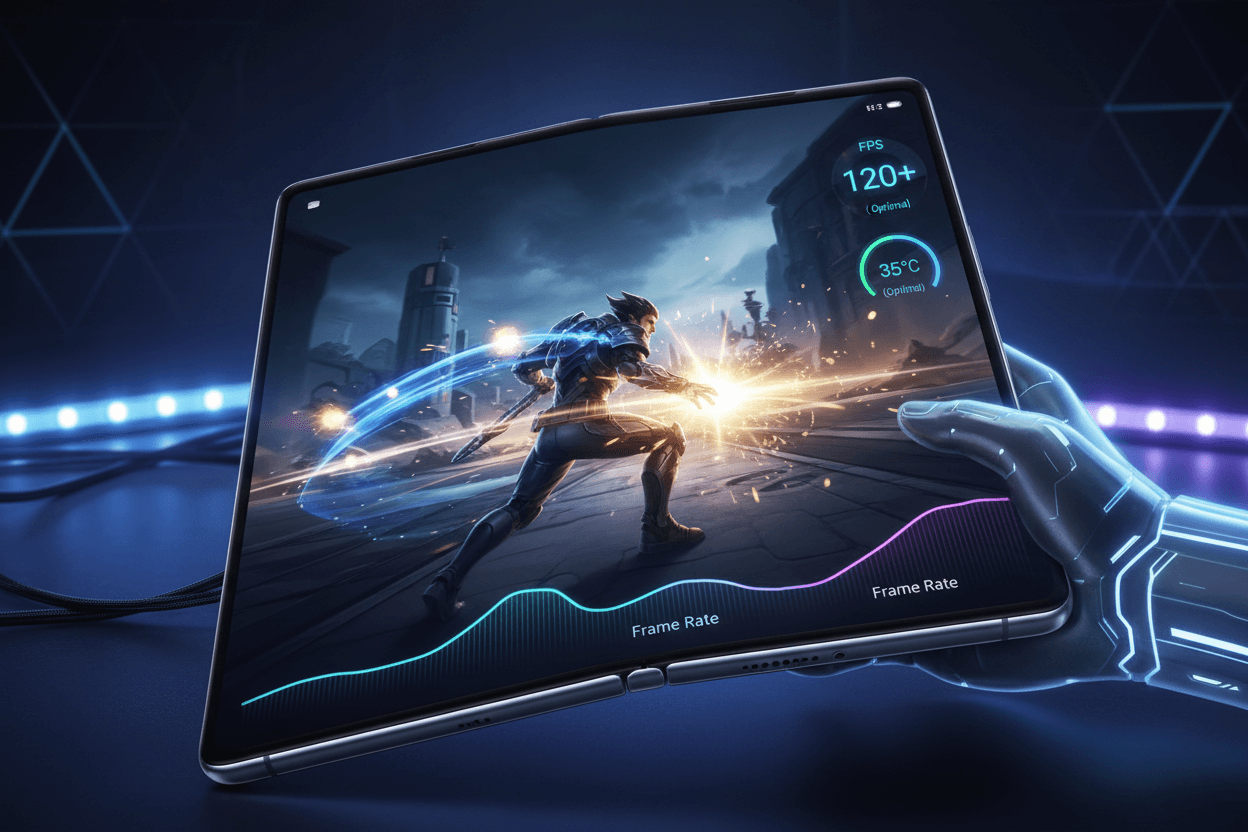
Introduction of Huawei Mate X7
The Huawei Mate X7 has quickly become a subject of fascination for tech enthusiasts and gamers alike — not just for its foldable form factor, but for its promise of delivering high-end performance in every use case. Powered by Huawei’s latest Kirin 9030 Pro chipset and paired with HarmonyOS 6’s efficient optimizations, the device claims to handle intensive tasks smoothly.
While gaming on foldable phones traditionally faced skepticism due to thermal and performance constraints, the Mate X7 attempts to defy expectations. The big question for Indian gamers is simple: Can the Mate X7 deliver a smooth, stable, and high-quality gaming experience comparable to top-tier phones or dedicated gaming smartphones? Over the following sections, we test and analyze gaming performance from all angles — hardware, software, graphics, gameplay, and real-world usage.
Hardware Overview: The Foundation of Gaming Power
At the heart of gaming performance lies the hardware stack:
Kirin 9030 Pro Chipset
The Mate X7 is powered by Huawei’s Kirin 9030 Pro flagship chipset. This chipset is designed with an advanced multi-core CPU and a capable GPU, targeting powerful multitasking and sustained performance. Coupled with up to 20GB LPDDR5X RAM and 1TB UFS storage, this hardware foundation offers plenty of headroom for demanding games.
Display Advantages
The foldable’s expansive 8-inch LTPO OLED display supports 120Hz refresh rate, extremely high touch sampling rates (up to 240–300Hz across inner and outer screens), and exceptional brightness levels. This means smooth frame delivery and responsive touch input, both critical for gaming.
Cooling and Sustained Performance
While Huawei has equipped the Mate X7 with VC-Liquid cooling and an advanced heat dissipation plate, the chipset’s efficiency plays a key role in managing sustained gaming sessions without throttling.
These hardware elements set the stage for what should be an impressive gaming experience — but real-world tests show how this translates to actual gameplay.
Game Performance Analysis: Smoothness, Frame Rates & Visual Fidelity
To evaluate the Mate X7’s gaming prowess, we reviewed several top-tier titles across different genres — from heavy 3D open-world games to competitive esports.
3D Action Games
Triple-A titles such as Genshin Impact, Call of Duty: Mobile, and PUBG Mobile are among the most demanding mobile games. On the Mate X7:
Genshin Impact ran smoothly at medium to high graphic presets, with occasional dips during extremely crowded scenes.
Frame rates remained stable near ~40–50 fps, with minor drops when the GPU load spiked.
The 120Hz display wasn’t fully utilized in the most demanding games, but the adaptive refresh rate still helped deliver smoother visuals.
This means that while peak 120Hz gaming may not be fully achievable in every 3D title, the overall gameplay remains fluid and stable, especially at optimized graphics levels.
Esports & Competitive Titles
Competitive games such as Clash Royale, Brawl Stars, Call of Duty: Mobile (Esports Mode), and Mobile Legends showcased crisp movement, low touch latencies, and consistent frame delivery due to both the high touch sampling rate and the hardware’s fast response. These games are less demanding on GPU and more sensitive to responsiveness — areas where the Mate X7 excels.
Visual Quality & Frame Consistency
Thanks to the adaptive LTPO panel and Huawei’s HarmonyOS graphics optimization, menus, animations, and environmental transitions appear extremely smooth during gameplay, even if the raw fps isn’t hit every second. This subjective smoothness impacts the perceived quality of gameplay significantly — especially in genres like RPGs and action titles.
Thermal Performance & Sustained Playability
One of the central concerns in gaming is heat generation. Powerful gaming devices often throttle performance when temperatures rise, reducing long-term performance.
On the Mate X7:
The VC-Liquid cooling and heat spreaders helped mitigate thermal buildup during extended gameplay sessions.
While the device does get warm under prolonged stress, it does not exhibit aggressive throttling that severely impacts performance.
Battery consumption remains relatively moderate compared to many flagship competitors.
That said, hardcore gamers looking for maximum clock speeds for every title or long sessions exceeding 2 hours may want a dedicated gaming phone with specialized cooling systems.
HarmonyOS Gaming Support & Optimization
Huawei’s HarmonyOS 6 plays a key role in shaping the gaming experience:
The OS dynamically manages resources between CPU, GPU, and RAM, offering a balanced performance rather than fixed clock speed spikes.
Game launchers and optimizers in HarmonyOS help prioritize frame stability during active gaming sessions.
Future updates, particularly with Huawei’s evolving graphics APIs like WebGE and Maleoon, could further improve optimization down the line.
However, due to restrictions in global game optimization for HarmonyOS (compared to Android’s ecosystem), some titles may not be fully optimized, potentially impacting the highest frame rates on certain games.
Foldable Screen Advantage: Immersive Gameplay
One of the biggest advantages for gamers using the Mate X7 is the foldable display:
Bigger Screen = Better Gameplay
The 8-inch inner display dramatically increases the field of view for games, making controls more comfortable and gameplay more immersive, especially in:
Strategy games where UI real estate matters.
RPGs with detailed environments.
Racing and flight sims where wider views improve overall responsiveness.
Even on the 6.49-inch cover display, gaming controls feel responsive and fluid due to high touch sampling rates and adaptive refresh.
Comparison With Competitors
While the Mate X7 doesn’t match the clock-for-clock gaming performance of dedicated flagship gamers like some Snapdragon Ultra devices (e.g., Snapdragon 8 Gen 3/4), it holds its own very well thanks to:
Large adaptive 120Hz foldable screen.
Efficient hardware utilization.
Excellent touch responsiveness.
For everyday gamers and casual enthusiasts, this foldable holds up remarkably well.
Conclusion: Gaming Verdict for India
The Huawei Mate X7 gaming performance is undeniably impressive in the context of foldable devices:
- Smooth graphics with adaptive refresh response.
- Stable performance across esports and mid-range 3D titles.
- Immersive foldable display enhances gameplay experience.
- Efficient heat and power management with VC-Liquid cooling.
- Not peak gaming powerhouse compared to dedicated gaming flagships.
In India, where gamers value both performance and form factor, the Mate X7 delivers one of the most compelling foldable gaming experiences — especially for those who want a premium all-rounder rather than a phone purely for gaming.
FAQs: Huawei Mate X7 Gaming Performance
Q.1. Can the Huawei Mate X7 run high-end games smoothly?
Yes — most high-end games like Genshin Impact and Call of Duty: Mobile run smoothly at medium to high settings, though 120Hz may not be fully leveraged in the most demanding titles.
Q.2. Does the Mate X7 overheat during long gaming sessions?
It can get warm, but the cooling system and efficient chipset help maintain stable performance without severe throttling in typical gaming sessions.
Q.3. Is the foldable display beneficial for gaming?
Absolutely — the 8-inch display provides immersive visuals and better control precision, enhancing overall gameplay.
Q.4. How does it compare to dedicated gaming phones?
It’s slightly behind the best gaming-centric devices in raw performance, but it offers excellent gaming for a foldable, with a balanced experience across visuals, smoothness, and usability.
Q.5. Does HarmonyOS improve gaming performance?
Yes — HarmonyOS dynamically manages resources and optimizes game performance, though global optimization depends on individual games.