Reducing E-Waste: Small Actions, Big Environmental Impact
Introduction
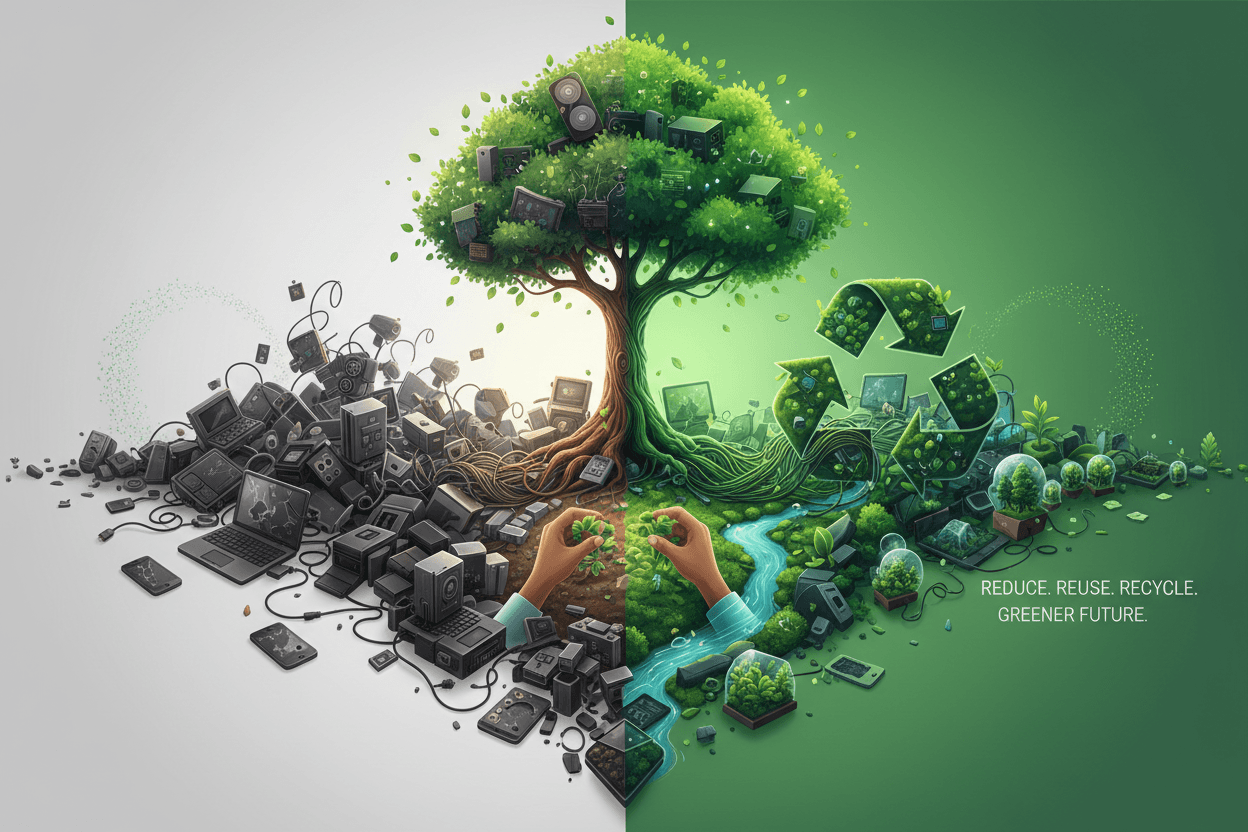
In today’s fast-moving digital world, laptops, mobiles, and phones have become essential tools for communication, productivity, and entertainment. However, the rapid upgrade cycle and increasing consumer demand have created a serious environmental challenge—electronic waste. Discarded devices often end up in landfills, releasing toxic substances into the soil and water. From batteries to circuit boards, these electronics contain hazardous materials that harm ecosystems and human health. The good news is that individuals can make a powerful difference. By adopting responsible habits and making conscious decisions, Reducing E-Waste becomes achievable through small but meaningful actions that create a big environmental impact.
Understanding the Growing Problem of Electronic Waste
Reducing E-Waste is becoming increasingly urgent as global electronic consumption rises each year. According to global environmental reports, millions of tons of electronic waste are generated annually, and only a small percentage is properly recycled. Laptops, mobiles, and phones contribute significantly to this waste stream because of their short replacement cycles. Many consumers upgrade devices every two to three years, even if older devices still function.
Electronic waste contains materials such as lead, mercury, and cadmium, which pose serious health risks when improperly disposed of. When devices are thrown into regular trash, they often end up in landfills, contaminating soil and groundwater. Reducing E-Waste not only minimizes pollution but also conserves valuable resources like gold, copper, and rare earth metals found inside electronics. These materials require extensive mining, which damages natural habitats and increases carbon emissions.
Governments and organizations worldwide are promoting recycling programs and sustainable manufacturing. However, individual responsibility plays a key role. By understanding how our purchasing and disposal habits affect the planet, we can actively participate in Reducing E-Waste and protecting the environment for future generations.
Extending the Life of Laptops, Mobiles, and Phones
One of the simplest strategies for Reducing E-Waste is extending the lifespan of your devices. Instead of upgrading to the latest model every year, consider whether your current laptop or phone still meets your needs. Many performance issues can be resolved with software updates, battery replacements, or minor repairs.
Regular maintenance can significantly prolong device life. Cleaning hardware components, updating operating systems, and using protective cases prevent damage and improve durability. For example, replacing a battery in an older smartphone can restore performance and delay the need for a new purchase. These practical steps contribute directly to Reducing E-Waste while saving money.
Repair culture is also gaining popularity. Companies like Apple Inc. and Samsung Electronics have introduced repair programs and self-service tools to encourage consumers to fix rather than discard devices. Supporting repair-friendly brands aligns with the goal of Reducing E-Waste and promotes a more sustainable technology ecosystem.
Responsible Recycling and Proper Disposal
When devices truly reach the end of their life, responsible recycling becomes essential for Reducing E-Waste. Many electronics retailers and manufacturers offer take-back or trade-in programs. These initiatives ensure that devices are dismantled safely and valuable materials are recovered efficiently.
Certified e-waste recycling centers follow strict environmental guidelines to prevent toxic leakage. Before recycling, users should erase personal data to protect privacy. Responsible disposal not only supports Reducing E-Waste but also encourages a circular economy where materials are reused instead of discarded.
Organizations such as United Nations Environment Programme advocate global efforts to manage electronic waste responsibly. Participating in local recycling drives or manufacturer buy-back programs strengthens the collective impact of Reducing E-Waste. Even donating functional laptops or mobiles to schools or charities can give devices a second life and reduce overall waste generation.
Smart Buying Decisions for Sustainable Impact
Another powerful approach to Reducing E-Waste is making informed purchasing decisions. Consumers can choose devices known for durability, repairability, and long-term software support. Investing in quality over frequent upgrades reduces waste and environmental strain.
Look for products with modular designs or replaceable components. Some brands are adopting eco-friendly materials and offering extended warranty options. These features encourage users to keep devices longer, directly supporting Reducing E-Waste efforts. Additionally, buying refurbished laptops or phones reduces demand for new manufacturing, lowering carbon emissions.
Energy efficiency also matters. Devices with better power management reduce overall environmental impact during their lifespan. By consciously selecting sustainable technology, individuals actively participate in Reducing E-Waste and shaping market demand toward environmentally responsible innovation.
The Role of Awareness and Community Action
Public awareness is crucial for Reducing E-Waste on a larger scale. Schools, workplaces, and communities can organize awareness campaigns highlighting the environmental consequences of improper electronic disposal. Educating younger generations about sustainable consumption fosters long-term behavioral change.
Community collection drives make recycling more accessible and convenient. Partnering with local authorities ensures safe handling of electronic waste. Collective action amplifies the impact of individual efforts, making Reducing E-Waste a shared responsibility rather than a personal task alone.
Digital minimalism is another emerging concept. By limiting unnecessary gadget purchases and focusing on functionality, consumers reduce waste generation. Social influence also plays a role—when sustainable habits become socially encouraged, Reducing E-Waste becomes a mainstream lifestyle choice rather than an occasional effort.
Small Actions That Make a Big Difference
Simple everyday choices significantly contribute to Reducing E-Waste. Using protective accessories prevents accidental damage. Avoiding overcharging preserves battery health. Selling or gifting old devices instead of discarding them extends their lifecycle.
Cloud storage and external drives can reduce the need for multiple devices. Sharing electronics within families or workplaces maximizes usage efficiency. Even spreading awareness through social media supports the mission of Reducing E-Waste by encouraging others to adopt responsible habits.
Ultimately, environmental protection does not always require drastic measures. Consistent, small actions taken by millions of people collectively create meaningful change. Through mindful consumption, responsible recycling, and extended device usage, Reducing E-Waste transforms from a concept into a powerful environmental movement.
Conclusion
The rapid growth of technology has transformed our lives, but it has also introduced serious environmental challenges. Laptops, mobiles, and phones are essential tools, yet their disposal contributes significantly to global electronic waste. Fortunately, Reducing E-Waste is within everyone’s reach. By extending device lifespan, choosing repair over replacement, recycling responsibly, and making sustainable purchasing decisions, individuals can reduce their environmental footprint. Small, consistent actions collectively produce significant results. When consumers, companies, and communities work together, Reducing E-Waste becomes more than an environmental goal—it becomes a shared responsibility that ensures a cleaner, healthier planet for future generations.
FAQs
Q.1. What is e-waste?
E-waste refers to discarded electronic devices such as laptops, mobiles, and phones that are no longer in use or functional.
Q.2. Why is reducing e-waste important?
Reducing e-waste prevents environmental pollution, conserves natural resources, and reduces health risks associated with toxic materials.
Q.3. How can I extend the life of my phone or laptop?
Regular maintenance, battery replacement, software updates, and protective accessories can significantly extend device lifespan.
Q.4. Where can I recycle old electronics?
You can recycle electronics at certified e-waste recycling centers, retailer take-back programs, or manufacturer trade-in initiatives.
Q.5. Does buying refurbished devices help reduce e-waste?
Yes, purchasing refurbished laptops or phones reduces demand for new manufacturing and supports the goal of reducing electronic waste.