Safe E-Waste Disposal Protects Human Health
Introduction
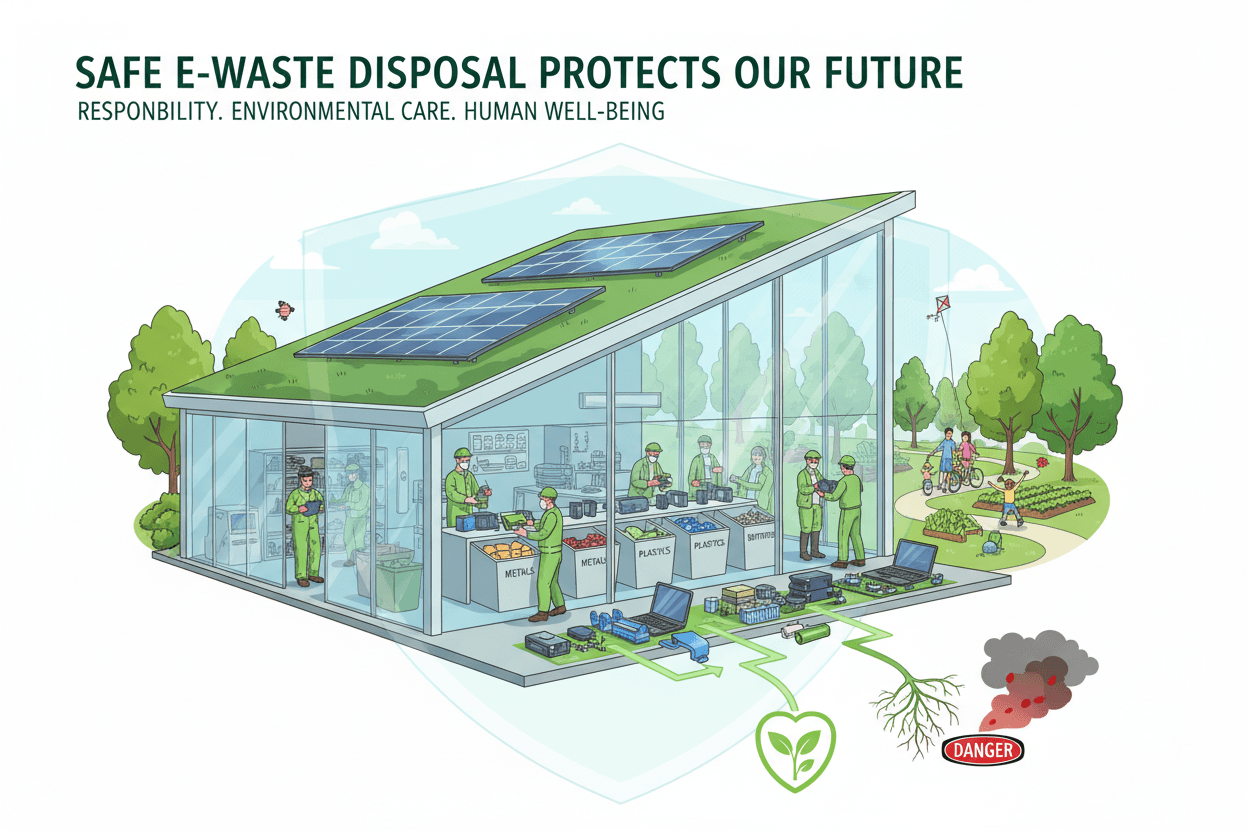
Safe E-Waste Disposal Protects Human Health by reducing the harmful impact of discarded electronic devices on people and the environment. In today’s digital world, smartphones, laptops, televisions, batteries, tablets, and other electronic gadgets are replaced more frequently than ever before. While technology improves our lives, the increasing amount of electronic waste, commonly known as e-waste, has become a serious global concern. Unsafe disposal of electronic products releases toxic substances into the soil, air, and water, directly affecting human health and environmental safety. Therefore, Safe E-Waste Disposal Protects Human Health by ensuring that hazardous materials are handled responsibly through recycling, reuse, and proper waste management practices.
Many people are unaware that old electronics contain dangerous chemicals such as lead, mercury, cadmium, and arsenic. When these items are thrown into regular garbage bins or burned openly, harmful toxins spread into nearby communities. Children, sanitation workers, and recycling workers are especially vulnerable to these health risks. This is why governments, environmental organizations, and recycling companies continuously promote awareness campaigns encouraging responsible e-waste management. Understanding how Safe E-Waste Disposal Protects Human Health is essential for creating a cleaner and safer future for everyone.
What is E-Waste?
Electronic waste, or e-waste, refers to discarded electrical and electronic devices that are no longer useful or functional. Common examples include:
- Mobile phones
- Computers and laptops
- Televisions
- Chargers and cables
- Refrigerators
- Washing machines
- Batteries
- Printers and scanners
As technology evolves rapidly, consumers upgrade devices more frequently, leading to millions of tons of electronic waste every year. Unfortunately, a large portion of this waste is disposed of improperly, creating severe environmental and health hazards. This is why Safe E-Waste Disposal Protects Human Health by reducing exposure to toxic substances and promoting sustainable recycling practices.
Harmful Chemicals Found in E-Waste
Electronic devices contain several toxic materials that can become dangerous when released into the environment. Some of the most harmful substances include:
Lead
Lead is commonly found in old televisions, computer monitors, and batteries. Exposure to lead can damage the brain, kidneys, and nervous system, especially in children.
Mercury
Mercury is present in LCD screens, fluorescent lamps, and some batteries. It can affect the brain, lungs, and immune system when inhaled or absorbed.
Cadmium
Cadmium is used in rechargeable batteries and semiconductors. Long-term exposure may cause lung disease, kidney damage, and weakened bones.
Arsenic
Arsenic is found in older electronic components and can lead to skin disorders, cancer, and cardiovascular diseases.
Brominated Flame Retardants
These chemicals are added to plastics in electronics to prevent fire. However, burning these materials releases toxic gases that affect respiratory health.
Because these substances are extremely dangerous, Safe E-Waste Disposal Protects Human Health by preventing toxins from entering the environment and reducing human exposure to hazardous chemicals.
How Improper E-Waste Disposal Harms Human Health
Improper disposal of e-waste can seriously affect human health in several ways. Many informal recycling practices involve burning wires, dismantling devices without protective equipment, or dumping electronics into landfills. These unsafe methods release toxic pollutants into the environment.
Air Pollution
Burning electronic waste releases poisonous gases and fine particles into the air. Breathing contaminated air can cause respiratory problems, asthma, lung infections, and chronic diseases.
Water Contamination
Toxic chemicals from landfills can seep into groundwater and rivers. Contaminated water affects drinking supplies and harms both humans and aquatic life.
Soil Pollution
Hazardous substances from e-waste accumulate in soil, reducing agricultural productivity and contaminating food crops.
Neurological Disorders
Exposure to lead and mercury can affect brain development, memory, learning ability, and nervous system functioning.
Increased Cancer Risks
Long-term exposure to toxic chemicals found in electronic waste may increase the risk of cancer and other life-threatening diseases.
This clearly shows why Safe E-Waste Disposal Protects Human Health and should be treated as a global priority.
Importance of Safe E-Waste Disposal
Proper management of electronic waste provides significant health and environmental benefits. Responsible disposal methods help recover valuable materials while reducing pollution and health hazards.
Reduces Environmental Pollution
Safe recycling prevents harmful chemicals from entering ecosystems, keeping air, water, and soil cleaner.
Protects Workers and Communities
Certified recycling facilities use protective equipment and environmentally safe techniques to process electronic waste.
Conserves Natural Resources
Recycling electronics recovers valuable metals such as gold, copper, silver, and aluminum, reducing the need for mining.
Promotes Sustainable Living
Responsible disposal encourages eco-friendly habits and supports a circular economy where materials are reused instead of wasted.
Prevents Illegal Dumping
Organized recycling programs reduce illegal dumping and unsafe handling of electronic waste.
As awareness increases, more individuals and businesses understand that Safe E-Waste Disposal Protects Human Health and contributes to a healthier planet.
Ways to Dispose of E-Waste Safely
Everyone can contribute to safer e-waste management by following simple disposal practices.
Use Authorized Recycling Centers
Always take old electronics to certified recycling facilities or collection centers that follow environmental regulations.
Donate Working Devices
If devices are still functional, donate them to schools, charities, or organizations that can reuse them.
Participate in Take-Back Programs
Many electronics manufacturers offer recycling or trade-in programs for old devices.
Separate E-Waste from Household Garbage
Never mix electronic waste with regular trash. Keep batteries, chargers, and gadgets separate for proper disposal.
Protect Personal Data
Before recycling devices, erase personal information and reset devices to factory settings.
By practicing these habits, communities can ensure that Safe E-Waste Disposal Protects Human Health and minimizes environmental damage.
Role of Governments and Organizations
Governments and environmental organizations play a major role in controlling e-waste pollution. Many countries have introduced regulations requiring manufacturers to collect and recycle electronic products responsibly.
Public Awareness Campaigns
Educational programs inform people about the dangers of improper e-waste disposal and encourage responsible recycling.
Recycling Infrastructure
Governments invest in recycling facilities and collection systems to improve waste management.
Environmental Laws
Strict laws help prevent illegal dumping and ensure safe recycling practices.
Corporate Responsibility
Technology companies are increasingly designing eco-friendly products and supporting recycling initiatives.
These efforts demonstrate how collective action ensures that Safe E-Waste Disposal Protects Human Health and promotes sustainable development.
How Individuals Can Create Awareness
Every individual can help spread awareness about electronic waste management.
- Educate family and friends about safe disposal methods
- Share awareness posts on social media
- Participate in local recycling drives
- Encourage schools and workplaces to organize e-waste collection campaigns
- Support companies that promote sustainable practices
Small actions can create a significant impact when communities work together to reduce electronic waste pollution.
Conclusion
Safe E-Waste Disposal Protects Human Health by reducing exposure to toxic chemicals, preventing environmental pollution, and promoting sustainable resource management. As the use of electronic devices continues to increase, responsible disposal practices are becoming more important than ever. Improper handling of e-waste can lead to severe health issues, including respiratory diseases, neurological disorders, and water contamination. However, safe recycling methods help protect communities, conserve valuable materials, and create a cleaner environment for future generations.
Governments, organizations, manufacturers, and individuals all share responsibility in addressing the growing e-waste problem. By using authorized recycling centers, supporting awareness campaigns, and practicing responsible disposal habits, everyone can contribute to a healthier and safer world. Ultimately, Safe E-Waste Disposal Protects Human Health and ensures a sustainable future where technology and environmental protection can coexist harmoniously.
FAQs
Q.1. What is e-waste?
E-waste refers to discarded electronic and electrical devices such as phones, computers, televisions, batteries, and household appliances.
Q.2. Why is e-waste dangerous to human health?
E-waste contains toxic chemicals like lead, mercury, and cadmium that can cause serious health problems when improperly disposed of.
Q.3. How can I dispose of electronic waste safely?
You can dispose of e-waste safely through certified recycling centers, manufacturer take-back programs, or donation programs for reusable devices.
Q.4. What are the environmental effects of improper e-waste disposal?
Improper disposal causes air pollution, water contamination, soil degradation, and harm to wildlife and ecosystems.
Q.5. How does safe e-waste disposal benefit society?
Safe disposal protects public health, reduces pollution, conserves natural resources, and supports sustainable environmental practices.