E-waste recycling process step by step detailed explanation guide
Introduction
Electronic waste, commonly known as e-waste, is one of the fastest-growing waste streams globally. With the rapid upgrade cycle of laptops, mobile phones, and smartwatches, millions of devices are discarded every year. These devices contain valuable materials like gold, copper, lithium, and rare earth metals, but also hazardous substances such as lead, mercury, and cadmium. Without proper handling, e-waste can severely damage soil, water, air quality, and human health. Understanding the e-waste recycling process step by step is essential for building a sustainable future and ensuring responsible disposal of electronic products.
What Is E-Waste?
E-waste refers to discarded electrical and electronic equipment that has reached the end of its usable life. This includes:
Laptops and desktops
Mobile phones and tablets
Smartwatches and wearables
Chargers, batteries, circuit boards, and accessories
When not recycled properly, these products end up in landfills or informal recycling sectors, leading to environmental pollution and health risks.
Why E-Waste Recycling Is Important
Recycling laptops, mobiles, and watches is crucial because:
It prevents toxic chemicals from contaminating the environment
It conserves natural resources
It reduces greenhouse gas emissions
It recovers valuable metals
It supports a circular economy
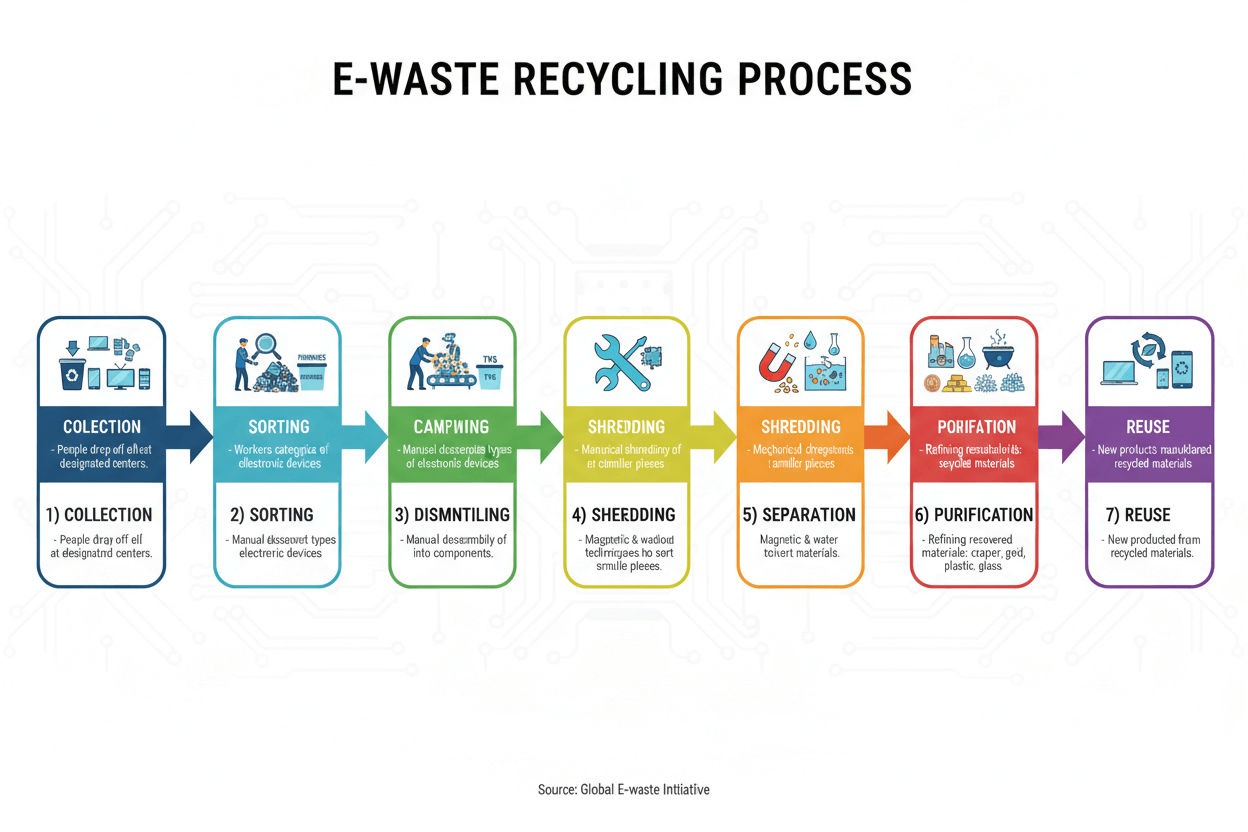
Now, let’s explore the step-by-step e-waste recycling process in detail.
Collection of E-Waste
The first and most critical step in the e-waste recycling process is collection.
How E-Waste Is Collected
Authorized e-waste collection centers
Manufacturer take-back programs
Corporate IT asset disposal
Household drop-off drives
Retailer recycling programs
Devices Collected
Old laptops and notebook computers
Broken or outdated smartphones
Used smartwatches and fitness bands
Proper collection ensures e-waste enters the formal recycling system instead of landfills.
Transportation to Recycling Facilities
Once collected, e-waste is transported to authorized recycling plants using regulated logistics.
Why Safe Transportation Matters
Prevents breakage and toxic leakage
Ensures compliance with environmental laws
Avoids illegal dumping
For batteries in mobiles and watches, special fire-safe containers are used to reduce risk during transport.
Sorting and Categorization
At the recycling facility, e-waste undergoes manual and automated sorting.
Sorting Based On
Device type (laptops, mobiles, watches)
Material composition
Hazardous vs non-hazardous parts
Examples
Lithium-ion batteries separated from mobiles and smartwatches
Screens removed from laptops
Plastic casings sorted independently
This step improves recycling efficiency and worker safety.
Manual Dismantling
Manual dismantling is one of the most labor-intensive stages of the e-waste recycling process.
What Happens Here
Devices are opened using specialized tools
Batteries are removed
Circuit boards are extracted
Displays, speakers, and cameras are separated
For Specific Devices
Laptops: Keyboard, hard drive, RAM, motherboard removed
Mobiles: Screen, battery, PCB separated
Smartwatches: Battery and micro-components extracted
Manual dismantling ensures maximum recovery of reusable and recyclable components.
Data Destruction and Security
For laptops and smartphones, data destruction is a critical step.
Why It’s Important
Prevents identity theft
Protects sensitive personal and corporate data
Methods Used
Certified data wiping
Physical destruction of storage devices
Shredding hard drives and memory chips
This step is especially important for businesses disposing of bulk electronics.
Mechanical Processing (Shredding)
After dismantling, remaining components move to mechanical processing.
Shredding Process
Devices are crushed into small pieces
Shredders break materials into fragments
Dust and hazardous particles are controlled using filters
Shredding helps separate metals, plastics, and glass efficiently.
Separation of Materials
This stage uses advanced technology to segregate materials.
Separation Techniques
Magnetic separation: Removes iron and steel
Eddy current separation: Extracts aluminum and copper
Optical sorting: Identifies plastics
Air classification: Separates light materials
Recovered Materials
Copper from cables and PCBs
Gold and silver from circuit boards
Aluminum from laptop frames
Plastics from phone casings
Battery Recycling and Treatment
Batteries from mobiles, laptops, and watches require special handling.
Battery Recycling Process
Discharging batteries to avoid explosions
Crushing in controlled environments
Extracting lithium, cobalt, and nickel
Neutralizing toxic electrolytes
Improper battery disposal is one of the biggest environmental threats, making this step extremely important.
Refining and Recovery of Precious Metals
Electronic devices contain valuable precious metals.
Metals Recovered
Gold from connectors and PCBs
Silver from solder points
Palladium from microchips
Copper from wiring
These metals are refined using chemical or thermal processes and reused in manufacturing new electronics.
Plastic Recycling
Plastics from laptops, mobiles, and watches are recycled separately.
Plastic Recycling Steps
Cleaning and decontamination
Shredding into pellets
Melting and reshaping
Recycled plastic is used in new electronic casings, furniture, and packaging.
Safe Disposal of Hazardous Waste
Not all materials can be recycled.
Hazardous Materials Include
Mercury from screens
Lead from solder
Flame retardants
These materials are disposed of in secure hazardous waste facilities to prevent environmental contamination.
Reuse and Refurbishment
Some components can be reused instead of recycled.
Reusable Items
Laptop RAM and SSDs
Smartphone screens
Watch sensors
Refurbishment extends product life and reduces overall e-waste generation.
Environmental Benefits of Proper E-Waste Recycling
Reduces landfill waste
Prevents toxic pollution
Saves energy compared to mining
Lowers carbon footprint
Supports sustainable manufacturing
Recycling one million laptops can save enough energy to power thousands of homes annually.
How Individuals Can Support E-Waste Recycling
Donate old electronics
Use authorized recyclers
Avoid throwing electronics in household trash
Support brands with take-back programs
Spread awareness about responsible disposal
Conclusion
The e-waste recycling process step by step is a complex yet essential system that ensures safe disposal, material recovery, and environmental protection. From collection and dismantling to material separation and refining, each stage plays a vital role in managing discarded laptops, mobile phones, and smartwatches responsibly. With rising electronic consumption, adopting proper e-waste recycling practices is no longer optional—it is a global necessity. By understanding and supporting this process, individuals and organizations can contribute significantly to sustainability, resource conservation, and a cleaner future.
FAQs
Q.1. What is the first step in e-waste recycling?
Collection of discarded electronic devices through authorized channels.
Q.2. Why are batteries removed separately during recycling?
Because they contain hazardous chemicals and require special treatment.
Q.3. Can precious metals really be recovered from e-waste?
Yes, gold, silver, copper, and palladium are commonly extracted.
Q.4. Is data completely destroyed during e-waste recycling?
Yes, certified recyclers ensure secure data wiping or physical destruction.
Q.5. Can smartwatches be recycled like mobile phones?
Yes, smartwatches follow similar recycling processes with special battery handling.